
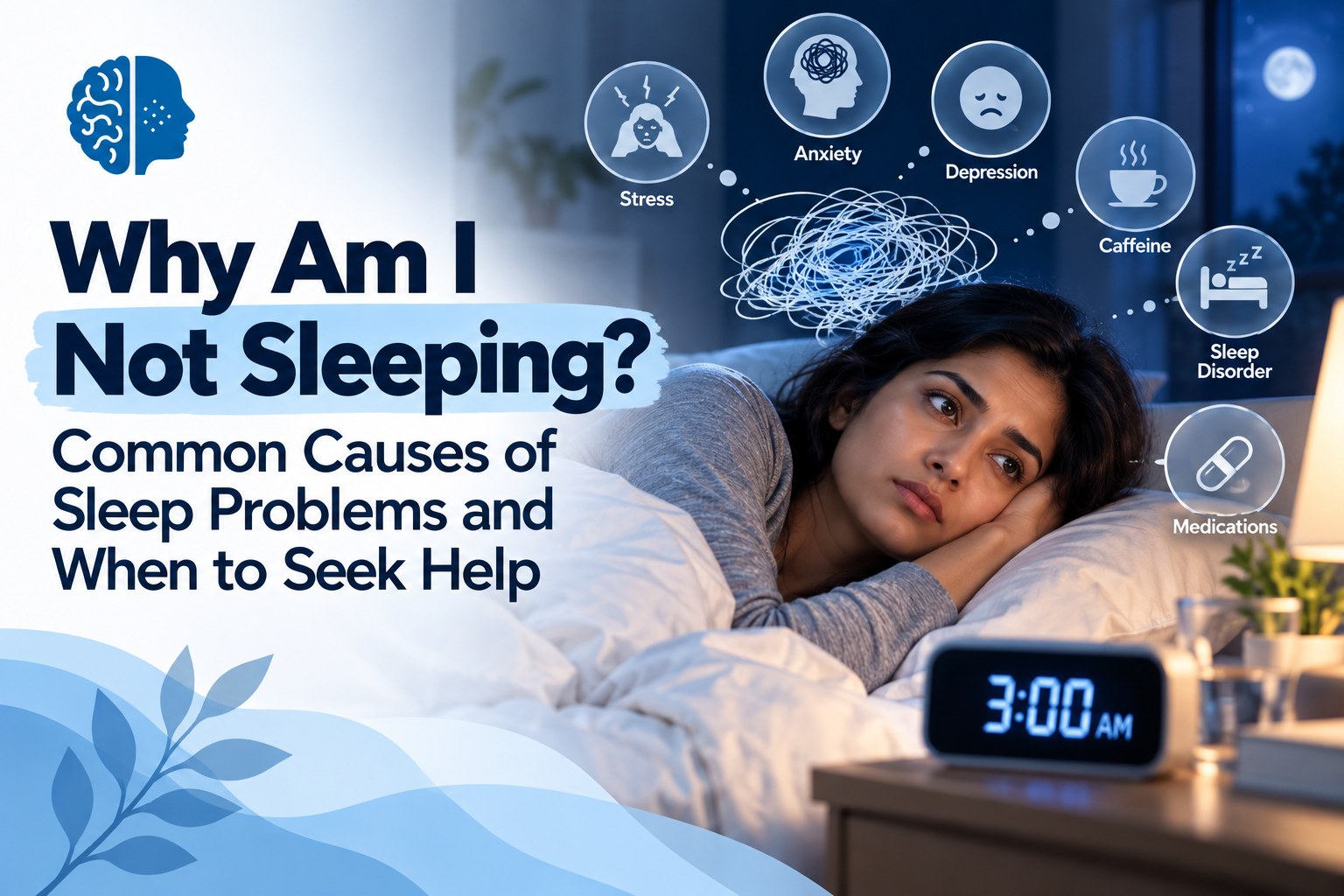
Sleep is an important part of both physical and mental well-being. When you do not sleep properly, you may feel tired during the day, struggle to concentrate, become more irritable or find it difficult to manage normal responsibilities.
Sleeping badly once in a while is common. Stress, travel, late-night screen use or a change in routine can temporarily affect your sleep. However, when sleep problems continue, keep coming back or start affecting your daily life, it is worth understanding the possible reason.
Sleep Disorder Treatment in Indore can involve more than simply taking something to help you sleep. The right approach depends on why your sleep has changed and whether there are other symptoms such as anxiety, depression, stress or mood changes.
In this blog, we will discuss common reasons for sleep problems, signs that you should not ignore and when it may be useful to consult a psychiatrist.
How Much Sleep Do Adults Usually Need?
Most adults generally need around 7 to 9 hours of sleep each night, although individual sleep requirements can vary.
The number of hours is not the only factor. Good sleep should also help you feel reasonably rested and able to function during the day.
You may have a sleep problem if you regularly:
- Take a long time to fall asleep
- Wake up several times during the night
- Wake up much earlier than planned
- Feel tired even after sleeping
- Feel excessively sleepy during the day
- Have difficulty maintaining a regular sleep schedule
If these problems continue, Sleep Disorder Treatment in Indore may be worth considering after understanding the underlying cause.
What Are Common Sleep Problems?
Sleep difficulties can appear in different ways. Some people struggle to fall asleep, while others wake frequently or sleep for long periods but still feel tired.
Difficulty Falling Asleep
You may go to bed feeling tired but remain awake for a long time.
Waking Up Frequently
You may fall asleep easily but wake several times during the night.
Waking Up Too Early
Some people wake up much earlier than planned and cannot return to sleep.
Excessive Sleepiness
You may sleep for an adequate amount of time but still feel unusually sleepy during the day.
Irregular Sleep Schedule
Late nights, shift work, travel and inconsistent sleeping times can disturb your normal sleep pattern.
Understanding the type of problem you are experiencing is an important part of finding appropriate Sleep Disorder Treatment in Indore.
1. Stress Can Make It Difficult to Sleep
Stress is one of the common reasons people struggle with sleep.
Work pressure, financial concerns, relationship problems, family responsibilities and other stressful situations can keep your mind active at night.
You may lie awake thinking about:
- Tomorrow’s responsibilities
- Work or studies
- Family concerns
- Financial problems
- Difficult conversations
- Things that happened during the day
This can create a cycle where you start worrying about not sleeping, which can make it even harder to fall asleep.
If stress is regularly affecting your sleep, discussing the problem with a Psychiatrist in Indore may help you understand whether additional mental health concerns are contributing.
2. Anxiety Can Affect Your Sleep
Anxiety and sleep problems can occur together.
When you constantly worry about different situations, your mind may remain alert when you are trying to sleep. You may replay conversations, imagine negative outcomes or think repeatedly about what could go wrong.
Anxiety can also cause physical symptoms such as:
- Restlessness
- Muscle tension
- Fast heartbeat
- Sweating
- Difficulty relaxing
If anxiety is regularly keeping you awake, a Psychiatrist Near Me in Indore can assess your symptoms and help determine whether anxiety may be contributing to your sleep problem.
3. Depression Can Change Your Sleep
Depression can affect sleep in different ways.
Some people with depression have difficulty falling asleep or wake up much earlier than usual. Others may sleep for long periods and still feel tired.
Sleep changes may occur alongside:
- Persistent sadness
- Loss of interest
- Low energy
- Difficulty concentrating
- Feelings of hopelessness
- Changes in appetite
If your sleep problems occur together with ongoing changes in mood, consider discussing both issues rather than treating sleep as an isolated problem.
Appropriate Sleep Disorder Treatment in Indore starts with understanding what may be contributing to the sleep disturbance.
4. Late-Night Screen Use May Affect Your Sleep
Using your phone, laptop or television late at night can make it harder to maintain a healthy bedtime routine.
The issue is not only screen exposure. Social media, gaming, work messages, videos and other stimulating activities can keep your mind active when you are trying to relax.
You can try reducing stimulating screen activities before bedtime and creating a calmer evening routine.
If sleep problems continue despite these changes, professional assessment may be useful.
5. Caffeine, Alcohol and Other Substances Can Affect Sleep
Coffee, tea, energy drinks and other sources of caffeine can affect sleep, especially when consumed later in the day.
Alcohol may make some people feel sleepy initially, but it can interfere with sleep quality and cause disturbed sleep later during the night.
Nicotine and other substances can also affect sleep.
If you regularly depend on alcohol, substances or medicines to help you sleep, speak openly with a qualified doctor. This information can be important when deciding on suitable Sleep Disorder Treatment in Indore.
6. An Irregular Daily Routine Can Disturb Sleep
Your body generally benefits from a reasonably consistent sleep and wake schedule.
Going to bed at very different times every night can make it difficult to maintain a regular sleep pattern.
Other factors can include:
- Working night shifts
- Frequent travel
- Sleeping very late on weekends
- Long daytime naps
- Low daytime activity
- Spending little time outdoors
Improving your routine may help, but persistent sleep problems can have other causes that require professional assessment.
7. Some Medicines and Health Problems Can Affect Sleep
Sleep problems are not always caused by stress or mental health concerns.
Some physical health conditions and medicines can affect sleep. Pain, breathing difficulties, hormonal changes and other health problems may contribute to disturbed sleep.
If your sleep changed after starting a new medicine or alongside another physical symptom, speak with your doctor.
A proper assessment can help determine whether you need psychiatric, medical or another type of specialist evaluation.
8. Mood Changes Can Affect Your Sleep
Major changes in sleep can sometimes occur along with mood disorders.
For example, during certain mood episodes associated with bipolar disorder, a person may need much less sleep while still feeling unusually energetic or active.
Other changes may include:
- Racing thoughts
- Increased talking
- Increased activity
- Unusual confidence
- Impulsive decisions
If major changes in sleep occur together with significant mood or behavioural changes, it is important to seek professional assessment.
A Psychiatrist in Indore can assess the overall pattern rather than looking at the sleep problem alone.
9. Worrying About Sleep Can Become a Cycle
One frustrating part of sleep problems is that worrying about sleep can make sleeping more difficult.
You may start thinking:
“What if I cannot sleep tonight?”
“How will I manage tomorrow?”
“Why am I still awake?”
The more you focus on the clock and worry about the consequences of poor sleep, the more alert you may feel.
This does not mean the sleep problem is imaginary. Anxiety around sleep can become part of the problem and may need to be addressed along with other factors.
When Should You Seek Sleep Disorder Treatment in Indore?
Consider professional help when sleep problems are persistent, keep returning or are affecting your everyday life.
You may benefit from an assessment if you:
- Regularly struggle to fall asleep
- Wake repeatedly during the night
- Wake much earlier than planned
- Feel tired despite spending enough time in bed
- Feel excessively sleepy during the day
- Have difficulty concentrating
- Notice significant mood changes
- Have anxiety or depression along with sleep problems
- Depend on alcohol or medicines to sleep
- Experience major sleep changes along with unusual behaviour or mood
Sleep Disorder Treatment in Indore should be based on the cause of the problem rather than simply trying to manage the symptom.
When Should You See a Psychiatrist for Sleep Problems?
Not every sleep problem requires psychiatric treatment.
However, a Psychiatrist in Indore may be helpful when sleep difficulties occur alongside anxiety, depression, panic attacks, OCD, mood changes or other mental health concerns.
A psychiatric assessment can include questions about your sleep pattern, mood, thoughts, daily routine, medicines, medical history and other relevant factors.
The goal is to understand why the sleep problem is happening and decide what type of treatment or support may be appropriate.
If you are searching for a Psychiatrist Near Me in Indore, consider discussing persistent sleep problems rather than trying to manage them without understanding the possible cause.
How Are Sleep Problems Evaluated?
During a consultation, the doctor may ask about your sleep routine and overall health.
You may be asked:
- What time do you normally go to bed?
- How long does it take you to fall asleep?
- How often do you wake during the night?
- What time do you usually wake up?
- Do you feel rested in the morning?
- Do you sleep during the day?
- Do you consume caffeine or alcohol?
- Are you taking any medicines?
- Have you been experiencing stress or anxiety?
- Have you noticed changes in your mood?
Keeping a simple sleep diary for a few days may also help identify patterns.
This information can help the doctor decide whether Sleep Disorder Treatment in Indore or another type of medical evaluation may be appropriate.
What Can You Do to Improve Your Sleep?
Some simple changes may help improve sleep for certain people.
Maintain a Consistent Sleep Schedule
Try to go to bed and wake up at roughly the same time each day.
Create a Relaxing Bedtime Routine
Give yourself some quiet time before bed instead of moving directly from work or stimulating activities into sleep.
Reduce Late-Night Screen Use
Limit social media, gaming and other stimulating activities close to bedtime.
Be Careful With Caffeine
If caffeine affects your sleep, avoid consuming it close to bedtime.
Keep Your Bedroom Comfortable
A quiet, comfortable and suitably dark environment may make it easier to sleep.
Avoid Using Alcohol as a Sleep Solution
Alcohol may make you sleepy initially but can disturb sleep later in the night.
Stay Active During the Day
Regular daytime activity can support healthy sleep.
If these changes do not improve persistent sleep difficulties, professional assessment may be useful.
Can Online Psychiatric Consultation Help With Sleep Problems?
For suitable patients, an online psychiatric consultation may be an option when sleep problems occur alongside mental health concerns.
During an online consultation, a psychiatrist can discuss your symptoms, sleep pattern, medical history and other relevant concerns.
However, online consultation is not suitable for every situation. If an in-person assessment is clinically necessary or there is a psychiatric emergency, immediate in-person care may be required.
Sleep Problems and Mental Health
Poor sleep can affect mood, concentration, energy and the ability to manage everyday stress.
At the same time, mental health conditions can also affect sleep.
This can sometimes create a cycle:
Mental health symptoms → disturbed sleep → daytime tiredness → difficulty coping → increased stress → more sleep problems
Breaking this cycle may require more than simply going to bed earlier.
Understanding the possible cause is an important part of finding appropriate support.
When Sleep Problems Need More Attention
You should not ignore sleep problems when they begin affecting important areas of your life.
For example, poor sleep may make it difficult to:
- Concentrate at work
- Study effectively
- Drive safely
- Manage emotions
- Maintain relationships
- Complete everyday responsibilities
If your sleep is affecting these areas regularly, consider speaking with a qualified healthcare professional.
If you are unsure whether you need Sleep Disorder Treatment in Indore, a consultation can help you understand your symptoms and possible next steps.
Frequently Asked Questions
Why am I not sleeping at night even when I feel tired?
There can be several reasons, including stress, anxiety, irregular routines, caffeine, screen use, medicines or other health concerns. If the problem continues, consider discussing it with a Psychiatrist in Indore or another qualified healthcare professional.
How do I know if I have a sleep disorder?
Persistent difficulty falling asleep, frequent waking, early waking, excessive sleepiness or ongoing tiredness despite adequate sleep may indicate a sleep problem. A professional assessment can help determine whether Sleep Disorder Treatment in Indore is appropriate.
Can anxiety cause sleep problems?
Yes. Anxiety can keep your mind active at night and make it difficult to relax or fall asleep. If anxiety and sleep problems continue together, a Psychiatrist Near Me in Indore can assess your symptoms.
Can depression cause sleep problems?
Yes. Depression can cause difficulty sleeping, early waking or sleeping more than usual. If sleep changes occur with persistent low mood or loss of interest, consider speaking with a Psychiatrist in Indore.
When should I seek Sleep Disorder Treatment in Indore?
You should consider Sleep Disorder Treatment in Indore when sleep problems are persistent, keep returning or begin affecting your mood, concentration, work, studies or daily activities.
Can a psychiatrist help with insomnia?
A Psychiatrist in Indore can assess insomnia when it occurs alongside psychiatric or emotional concerns and determine what type of treatment may be appropriate. Other medical causes of insomnia may also need to be considered.
Can I consult a Psychiatrist Near Me in Indore for sleep problems?
Yes. If you are searching for a Psychiatrist Near Me in Indore, you can discuss persistent sleep difficulties and related mental health symptoms with a qualified psychiatrist.
Can I get online help for sleep problems?
Depending on your symptoms and clinical situation, an online psychiatric consultation may be suitable. Some situations may require an in-person assessment.
Is sleeping too much also a sleep problem?
Sleeping longer than usual can happen for many reasons. If you regularly sleep for long periods but still feel tired or notice changes in your mood or daily functioning, discuss the problem with a healthcare professional.
When should I see a psychiatrist for sleep problems?
If sleep problems continue despite changes to your routine, or if they occur along with anxiety, depression, major mood changes or other psychiatric symptoms, consulting a Psychiatrist in Indore may be appropriate.
Is Sleep Disorder Treatment in Indore different for every person?
Yes. The right Sleep Disorder Treatment in Indore depends on the underlying cause, symptoms, medical history and individual circumstances. Treatment should be decided after an appropriate assessment.
Final Thoughts
Not sleeping properly can affect much more than your energy the next morning. Persistent sleep problems can influence your mood, concentration, relationships and ability to manage everyday responsibilities.
Occasional sleeplessness is common, but ongoing sleep difficulties should not simply be ignored.
If you have tried improving your sleep routine but continue to struggle, or if your sleep problems occur alongside anxiety, depression, mood changes or other concerns, consider speaking with a qualified professional.
Dr. Atharva Shrotriya, MBBS, M.D. (Psychiatry), provides psychiatric care for concerns including sleep difficulties, depression, anxiety disorders, bipolar disorder, OCD and other mental health conditions.
Understanding the reason behind your sleep problem is an important first step toward finding appropriate support.